



menu

Commercial Toilet & Urinal Repair in Seattle | Minimize Downtime, Maximize Business Continuity

Industrial-grade commercial restroom fixture repair and flushometer services that keep your Seattle business operational. We diagnose fast, repair right, and restore function without disrupting your operations or your bottom line.

Slider Image 1
Slider Image 2
Slider Image 3
Slider Image 4
Slider Image 5
Slider Image 7
Slider Image 8
Slider Image 9
Slider Image 10
Slider Image 11

Why Commercial Restroom Failures Cost Seattle Businesses More Than You Think

A malfunctioning commercial toilet or urinal does not just inconvenience employees. It threatens your operational capacity, creates liability exposure, and damages your professional reputation with clients and tenants.

Seattle's commercial buildings face unique pressure on restroom infrastructure. High-rise construction in the downtown core and South Lake Union means plumbing systems operate under higher static pressure. Combined with Seattle's aggressive water conservation mandates requiring low-flow fixtures, you get increased wear on flush valves, diaphragms, and seals. The result is frequent flushometer failures, phantom flushes that waste water and spike utility bills, and weak flushing that leads to chronic clogs.

For restaurants in Pioneer Square, hotels near Pike Place Market, or office buildings in Belltown, a single out-of-order restroom reduces capacity during peak hours. You lose table turnover. You violate occupancy ratios. You face potential health code violations if restroom availability falls below required ratios per your Seattle Department of Construction and Inspections permit.

Industrial toilet repair services and commercial urinal maintenance are not optional. They are operational necessities. When a flush valve fails in a multi-stall restroom, the pressure imbalance affects adjacent fixtures. A leaking flushometer diaphragm wastes thousands of gallons monthly, driving up Seattle Public Utilities charges and triggering excess consumption penalties under tiered rate structures.

Commercial restroom fixture repair requires diagnostic precision, not guesswork. You need someone who understands pressure-assisted systems, sensor failures, and the specific demands of high-traffic environments.

Why Commercial Restroom Failures Cost Seattle Businesses More Than You Think
How We Diagnose and Repair Commercial Fixtures Without Disrupting Operations

How We Diagnose and Repair Commercial Fixtures Without Disrupting Operations

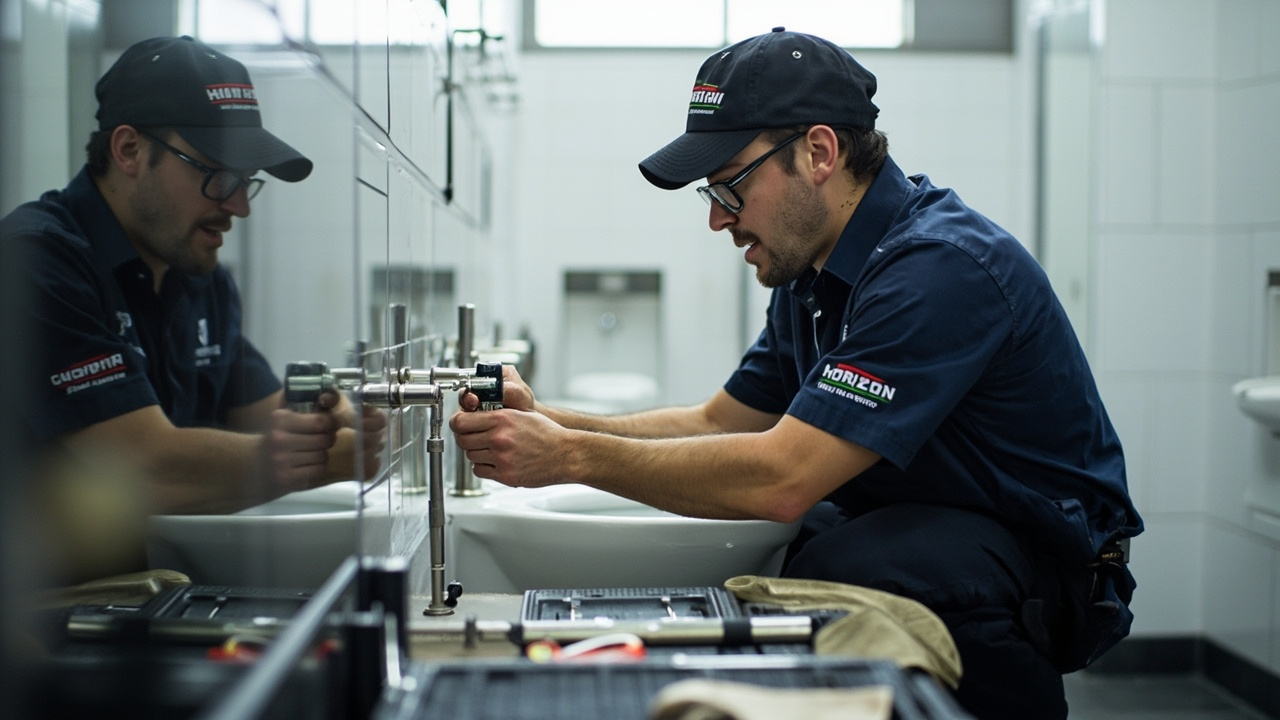
We do not shut down your facility to troubleshoot a toilet. Our approach starts with real-time diagnostics during your lowest-traffic windows, typically early morning or after-hours for restaurants and hotels.

First, we test system pressure at the flush valve inlet using calibrated gauges. Commercial flushometers require 25 to 80 PSI depending on fixture type. If pressure is outside spec, we trace upstream to identify the restriction, whether it is a clogged control stop, a failing pressure regulator, or sediment buildup in the supply line.

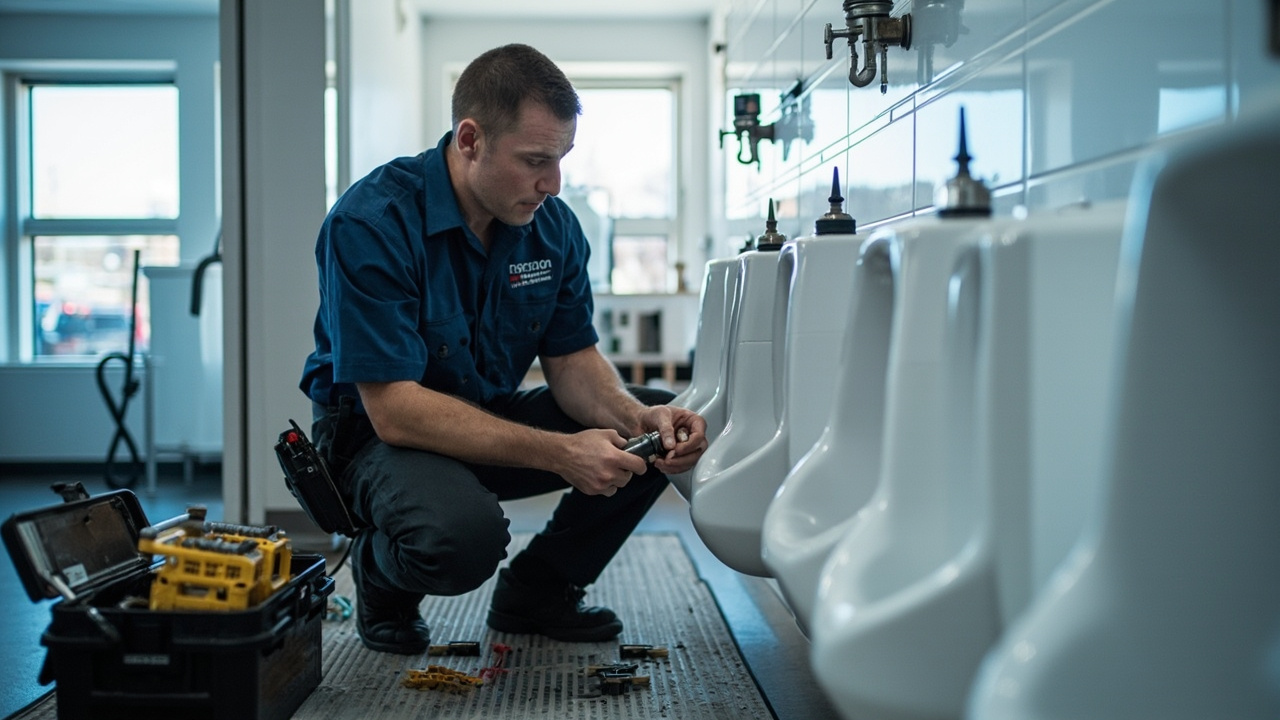
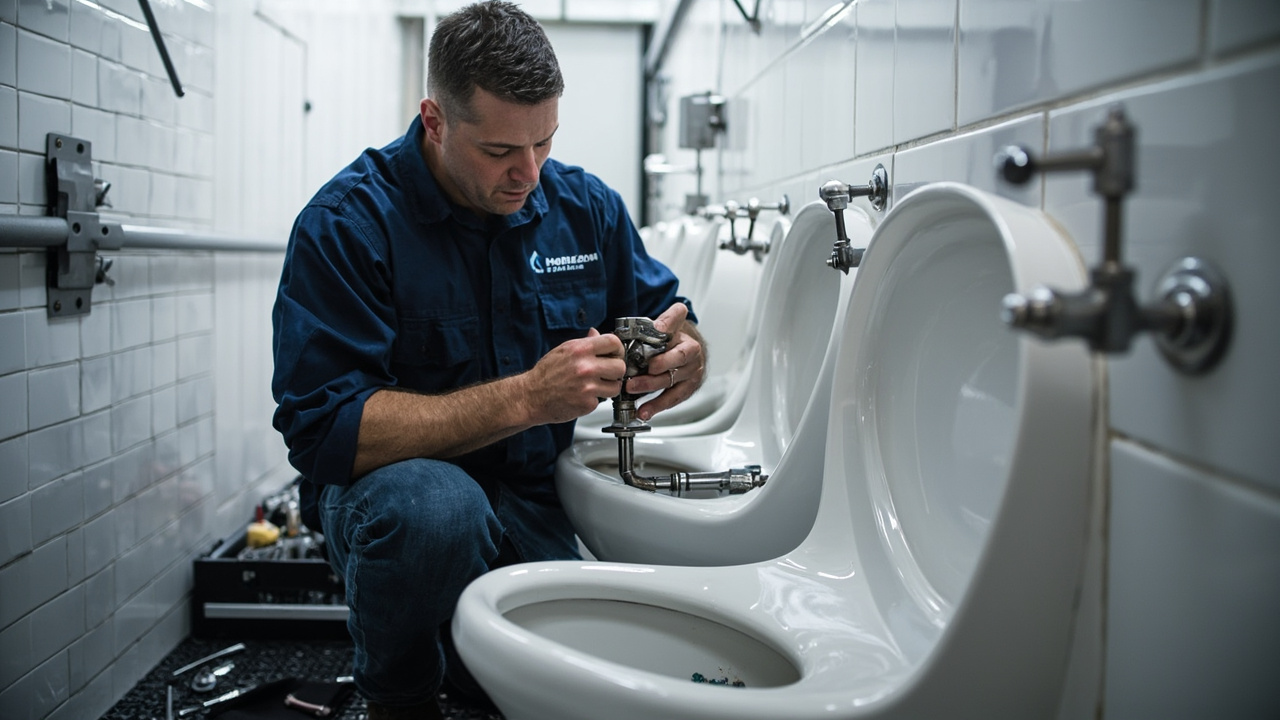
Next, we disassemble the flush valve to inspect the diaphragm, relief valve, and handle assembly. Most commercial flush valve replacements are unnecessary. The actual failure point is a worn diaphragm or a fouled relief valve. We carry OEM parts for Sloan, Zurn, and Chicago Faucets, the three dominant brands in Seattle commercial installations. We replace only what has failed.

For sensor-operated fixtures, we test the solenoid, check battery voltage, and verify the infrared beam is not obstructed by mineral deposits or misalignment. Sensor flushometers fail more often due to power issues than mechanical wear.

We also perform flush volume testing. A weak flush usually means the bypass orifice is clogged or the flush valve is not opening fully due to inadequate handle travel. We measure actual flush volume against the fixture's rated gallons per flush to ensure compliance with Seattle's water efficiency standards.

Our work does not create a mess. We contain water discharge, protect surrounding finishes, and leave the space cleaner than we found it. Downtime per fixture averages 30 to 45 minutes, not half a day.

What Happens During a Commercial Restroom Fixture Service Call

Commercial Toilet & Urinal Repair in Seattle | Minimize Downtime, Maximize Business Continuity
01

Initial Assessment and Triage

We arrive with a full inventory of commercial flush valve components and diagnostic tools. You explain the symptoms, continuous running, weak flush, sensor failure, and we immediately test the affected fixture and adjacent units to check for systemic pressure problems. We identify whether the issue is isolated to one valve or signals a larger building supply problem.
02

Component Repair or Replacement

We disassemble the flushometer, replace the failed diaphragm or relief valve, clean sediment from internal passages, and reassemble with proper torque. For urinal flush valves, we also inspect the tailpiece and spud coupling for leaks. If the fixture itself has a cracked bowl or damaged mounting flange, we provide a replacement recommendation with lead time and cost factors.
03

Function Testing and Documentation

We test each repaired fixture under normal operating conditions, verify proper flush volume, check for leaks at all connections, and ensure sensor activation range is correct. You receive a written summary of work performed, parts replaced, and any deferred maintenance items that need attention. We tag each fixture with the service date for your maintenance records.

Why Seattle Property Managers and Facility Directors Choose Horizon Plumbing Seattle

You do not have time to manage a plumber who shows up unprepared, cannot diagnose the actual problem, and turns a 30-minute repair into a three-hour ordeal. We work differently because we specialize in commercial environments where time equals money.

We stock parts for the fixtures actually installed in Seattle commercial buildings. That means Sloan Regal and Royal flushometers, Zurn sensor valves, and Chicago Faucets manual operators. We do not waste your time running to a supply house mid-job. We arrive ready to complete the repair in one visit.

Our technicians understand Seattle's plumbing code requirements, particularly the 2018 IPC amendments adopted by the city that mandate specific flush volumes for water closets and urinals in new and retrofit applications. If you are renovating restrooms in an older building, we ensure replacement fixtures meet current code without triggering a full restroom remodel requirement.

We also understand the operational realities of high-traffic facilities. A hotel near the convention center cannot afford to shut down a floor of restrooms during check-in. A restaurant in Capitol Hill cannot close restrooms during dinner service. We schedule around your peak hours and work efficiently to restore service before your next rush.

For multi-location operators, we provide consistency. Whether you manage office buildings in downtown Seattle, retail spaces in University Village, or industrial facilities in Georgetown, you get the same diagnostic rigor and repair quality at every site.

You also get documentation that satisfies your property management software and tenant reporting requirements. We provide detailed invoices, parts lists, and service notes that integrate with your maintenance tracking systems.

What to Expect When You Schedule Commercial Restroom Fixture Repair

Response Time and Scheduling Flexibility

We schedule commercial service calls within 24 to 48 hours for non-emergency repairs. If you have a complete restroom outage or a flushometer that will not stop running and is flooding the space, we dispatch within two hours. We work early mornings, evenings, and weekends to minimize impact on your operations. For multi-fixture projects, we provide a detailed timeline and coordinate with your facility team to stage repairs across multiple days if needed to maintain minimum restroom availability.

Diagnostic Process and Transparency

Before we perform any repair, we explain what failed, why it failed, and what the fix entails. You get a clear breakdown of labor and parts. We do not upsell unnecessary replacements. If a flush valve can be rebuilt for a fraction of the cost of replacement, we rebuild it. If the fixture itself is beyond economical repair due to age or damage, we provide replacement options with cost factors and lead times so you can make an informed decision.

Quality of Completed Work

When we finish a repair, the fixture operates at full design capacity. Flush valves close completely without dripping. Sensors activate reliably at the correct range. Water pressure is optimized for the fixture type. You will not have callbacks for the same issue because we address root causes, not symptoms. We also check adjacent fixtures for early warning signs of similar failures so you can plan proactive maintenance instead of reacting to breakdowns.

Maintenance Planning and Follow-Up

We provide recommended maintenance intervals based on your facility's usage patterns and water quality. High-traffic restrooms need quarterly inspections to catch diaphragm wear before it causes a failure. We offer preventive maintenance agreements that include scheduled inspections, priority emergency response, and discounted parts. You also receive a facilities report that identifies fixtures nearing end of service life so you can budget for replacements and avoid unexpected downtime.

Frequently Asked Questions

You Have Questions,
We Have Answers

How to fix a commercial toilet that won't flush all the way? +

A commercial toilet that won't complete its flush cycle typically suffers from a flushometer valve issue or inadequate water pressure. First, check the water supply line for partial closure or blockage. Inspect the flushometer diaphragm for wear or mineral buildup, common in Seattle's moderately hard water. If the diaphragm is cracked or scaled, replace it. Adjust the flush volume screw on the flushometer body to increase flow. Check for clogged rim jets under the bowl rim, which restrict water delivery. For pressure-assisted systems, verify adequate building pressure (35-80 PSI). Persistent issues require professional diagnosis to avoid code violations and maintain ADA compliance in your facility.

What is the most common toilet flush problem? +

The most common commercial toilet flush problem is a faulty flushometer diaphragm. This rubber component controls water flow during the flush cycle. Over time, mineral deposits from Seattle's water supply degrade the diaphragm, causing weak flushes, continuous running, or no flush at all. The second most frequent issue is inadequate water pressure due to supply line restrictions or building pressure fluctuations. Clogged rim jets rank third, restricting water distribution around the bowl. In high-traffic facilities, handle assembly wear also causes problems. Regular preventive maintenance prevents most flush failures and reduces downtime that disrupts business operations and creates liability concerns in public-access buildings.

How much does it cost for a plumber to repair a toilet flange? +

Commercial toilet flange repair in Seattle typically costs between the service call fee and parts replacement, depending on damage severity and accessibility. Factors affecting cost include flange type (cast iron, PVC, or stainless steel), concrete floor penetration depth, and whether subfloor damage exists. Cast iron flanges common in older Seattle buildings require more labor than PVC replacements. If the drain pipe is corroded or the floor structure is compromised, costs increase substantially. Emergency repairs during business hours cost more than scheduled maintenance. Licensed commercial plumbers charge different rates based on job complexity. Request a detailed estimate that includes labor, materials, and any necessary code compliance upgrades for King County regulations.

How do you adjust the valve on a commercial toilet? +

Adjusting a commercial toilet valve requires identifying your flush valve type. For manual flushometers, locate the control stop on the supply line and turn clockwise to reduce flow or counterclockwise to increase. Adjust the flush volume screw on the valve body using a flathead screwdriver, turning clockwise for shorter flush or counterclockwise for longer. For sensor-operated valves, access the adjustment dial behind the sensor cover. Set flush duration between 1.0 and 1.6 gallons per flush to meet Seattle's water efficiency codes. Never exceed manufacturer specifications. If adjustments don't resolve performance issues, the diaphragm or piston assembly likely needs replacement. Improper adjustments waste water and violate municipal conservation ordinances.

How Seattle's Water Quality and Building Codes Impact Commercial Flushometer Longevity

Seattle Public Utilities delivers some of the cleanest municipal water in the country, sourced primarily from the Cedar River and South Fork Tolt River watersheds. But even high-quality water carries dissolved minerals that accumulate in flush valve diaphragms and relief valves over time. Seattle's aggressive water conservation policies also mean commercial buildings installed low-flow flushometers to comply with the 1.28 gallons per flush standard for toilets and 0.5 gallons per flush for urinals. These ultra-low-flow fixtures require precise pressure regulation. A slight pressure drop or a partially clogged control stop causes incomplete flushes and chronic clogs.

Seattle's commercial plumbing code requires regular maintenance of backflow prevention devices and mandates specific fixture counts based on occupancy type and building use. For restaurants, you need one toilet per 75 occupants and one urinal per 50 male occupants. If a fixture goes down and you fall below the required ratio, you risk a failed health inspection. Horizon Plumbing Seattle understands these local requirements and works with property managers to maintain code compliance. We also navigate the permit requirements for fixture replacements in historic buildings downtown where Seattle's Landmarks Preservation Board has jurisdiction.

Plumbing Services in The Seattle Area

Horizon Plumbing Seattle proudly serves the entire Seattle metropolitan area and surrounding communities. We invite users to view our service area map to confirm that your home or business falls within our coverage zone, ensuring we can deliver fast, reliable service right to your doorstep. Our professional team is strategically located to offer prompt dispatch, whether you're in the heart of downtown or the outlying neighborhoods. Call us to confirm coverage and schedule your expert plumbing appointment today; we look forward to serving you with confidence and a warm welcome.

Address:
Horizon Plumbing Seattle, 1515 Dexter Ave N, Seattle, WA, 98109

Additional Services We Offer

Our news updates

Latest Articles & News from The Blogs

Is Your Garbage Disposal Safe for the Septic System at Your Rural King County Property? If you live in a…

Is Your Garbage Disposal Safe for the Septic System at Your Rural King County Property?

Is Your Garbage Disposal Safe for the Septic System at Your Rural King County Property? If you live in a…

Why You Should Consider a Pressure Reducing Valve for Your Phinney Ridge Home

Why You Should Consider a Pressure Reducing Valve for Your Phinney Ridge Home Living in Phinney Ridge means dealing with…

The Real Difference Between a Main Line Clog and a Simple Sink Drain Issue

The Real Difference Between a Main Line Clog and a Simple Sink Drain Issue \n\n Water backing up in your…

Contact Us

Call (564) 220-5552 to schedule service. We provide upfront pricing, fast response times, and repairs that restore full operational capacity without disrupting your business. Do not wait until a failed fixture impacts your bottom line.