




menu

Commercial Kitchen Plumbing in Seattle – Minimize Downtime, Maximize Revenue

Horizon Plumbing Seattle delivers industrial-grade restaurant plumbing services engineered for high-volume operations, with rapid response protocols that keep your kitchen operational and compliant with Seattle health codes.

Slider Image 1
Slider Image 2
Slider Image 3
Slider Image 4
Slider Image 5
Slider Image 7
Slider Image 8
Slider Image 9
Slider Image 10
Slider Image 11

Why Seattle Commercial Kitchens Face Unique Plumbing Demands

Seattle's food service sector operates under strict King County Health Department regulations that demand constant hot water availability, precise grease trap maintenance, and rapid drainage capacity. When your commercial kitchen plumbing fails, you are not dealing with inconvenience. You are facing health code violations, lost revenue, and potential closure notices.

The Pacific Northwest's mineral-heavy water accelerates scale buildup in dishwasher supply lines and pre-rinse spray valves. Most restaurant plumbing services overlook this localized issue until your equipment efficiency drops 30 percent. Seattle's aging infrastructure in Pioneer Square and Capitol Hill compounds the problem. Many buildings constructed before 1980 feature undersized waste lines that cannot handle modern, high-volume dish machines and three-compartment sinks running simultaneously.

Industrial kitchen plumbing requires different engineering than residential systems. Your grease interceptor must meet City of Seattle Side Sewer Code requirements for flow rate and retention time. Your floor drains need proper trap primers to prevent sewer gas migration during overnight closures. A single backed-up floor sink during dinner service can trigger an immediate health department response and mandatory closure until remediation is verified.

Food service plumbing failures cost Seattle restaurants an average of $2,800 per day in lost revenue, not including repair expenses or reputational damage. The commercial kitchen plumber you choose must understand commercial-grade fixtures, pressure requirements for rack conveyor dishwashers, and the difference between sanitary drainage and storm drainage systems that many Seattle buildings still combine illegally.

Why Seattle Commercial Kitchens Face Unique Plumbing Demands
How Professional Kitchen Plumbing Differs From Standard Service

How Professional Kitchen Plumbing Differs From Standard Service

Commercial kitchen plumbing operates under Code 412 of the Uniform Plumbing Code, which mandates specific fixture unit calculations, minimum pipe sizing, and backflow prevention that residential plumbers rarely encounter. When Horizon Plumbing Seattle evaluates your system, we calculate your total fixture unit load against your building's actual drainage capacity, not the capacity listed on 40-year-old permit drawings that may no longer reflect reality.

Your dishwasher requires 180-degree water at 20 PSI flow rate. Most commercial water heaters in Seattle struggle to maintain this during peak hours because the original system was sized for a 50-seat restaurant, but you now operate 120 seats with double the dishwashing volume. We perform heat loss calculations specific to your kitchen's layout and equipment demands, then right-size your water heating capacity to eliminate the mid-service failures that crash your operation.

Grease management separates competent commercial kitchen plumbers from residential technicians playing in the commercial space. Seattle's FOG (Fats, Oils, Grease) program requires interceptors sized to your actual flow rate and grease production. We measure your peak discharge during service, calculate retention time based on your menu's fat content, and install compliant systems that pass inspection without oversizing that wastes your capital budget.

Floor drain trap primers prevent the sewer gas intrusion that triggers customer complaints and health violations. Seattle's dry summer months cause trap seal evaporation in unused drains. We install automatic trap primers on all floor drains, mop sinks, and indirect waste receptacles to maintain proper seal depth year-round, eliminating the callback emergencies that cost you inspection fees and reopening delays.

Your Commercial Kitchen Plumbing Project Walkthrough

Commercial Kitchen Plumbing in Seattle – Minimize Downtime, Maximize Revenue
01

System Assessment and Capacity Analysis

We document every fixture, measure actual flow rates during peak operation, and map your drainage system against current building codes. This reveals undersized waste lines, improper venting, and equipment connected without proper air gaps. You receive a prioritized report identifying immediate health code risks versus efficiency improvements that reduce operating costs over time without forcing full system replacement.
02

Staged Installation and Testing

We schedule work during your closed hours to eliminate revenue loss. Critical repairs happen first, followed by system upgrades in phases that match your budget cycles. Every connection undergoes pressure testing before going live. We verify proper drainage slope using digital levels, confirm backflow preventer operation, and document all work with photos and serial numbers for your health department binder.
03

Compliance Verification and Turnover

You receive marked-up drawings showing every valve location, shut-off point, and cleanout access for your staff training. We walk your kitchen manager through emergency procedures, demonstrate proper grease trap maintenance, and provide a maintenance schedule calibrated to your volume. All work includes final inspection coordination with Seattle Department of Construction and Inspections, ensuring you pass without delays or reinspection fees.

Why Seattle Restaurants Trust Horizon Plumbing for Kitchen Systems

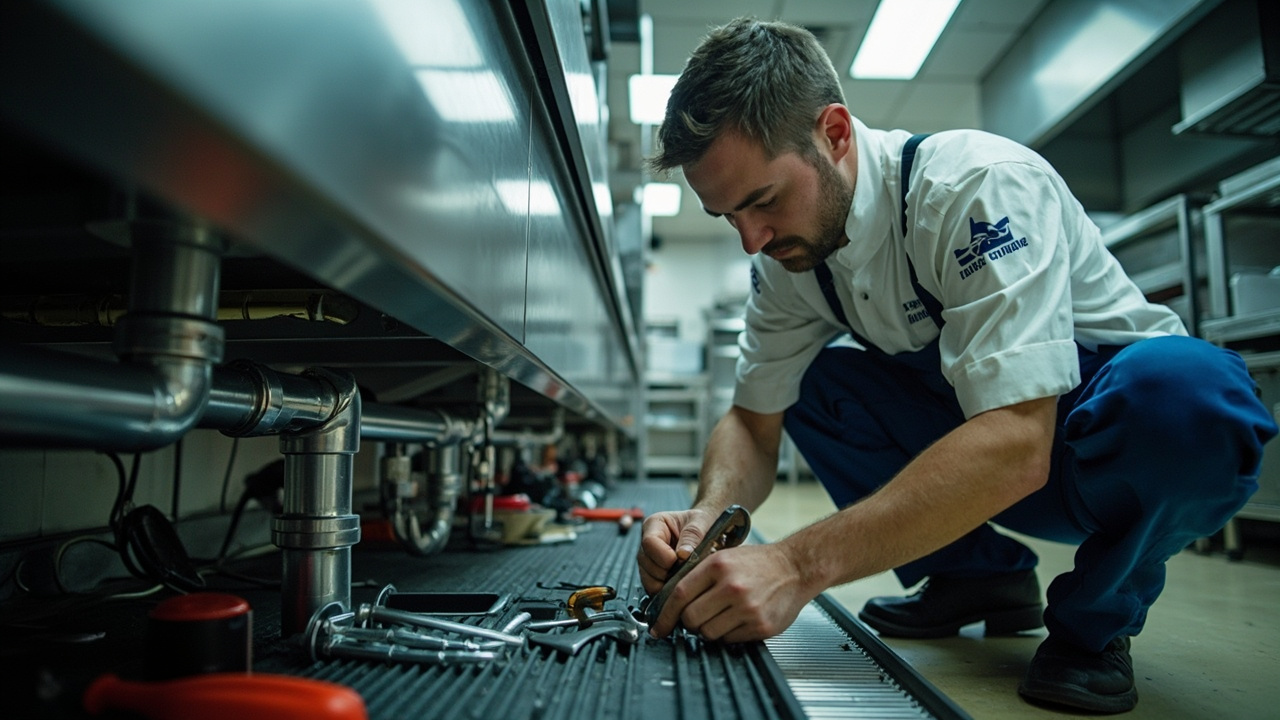
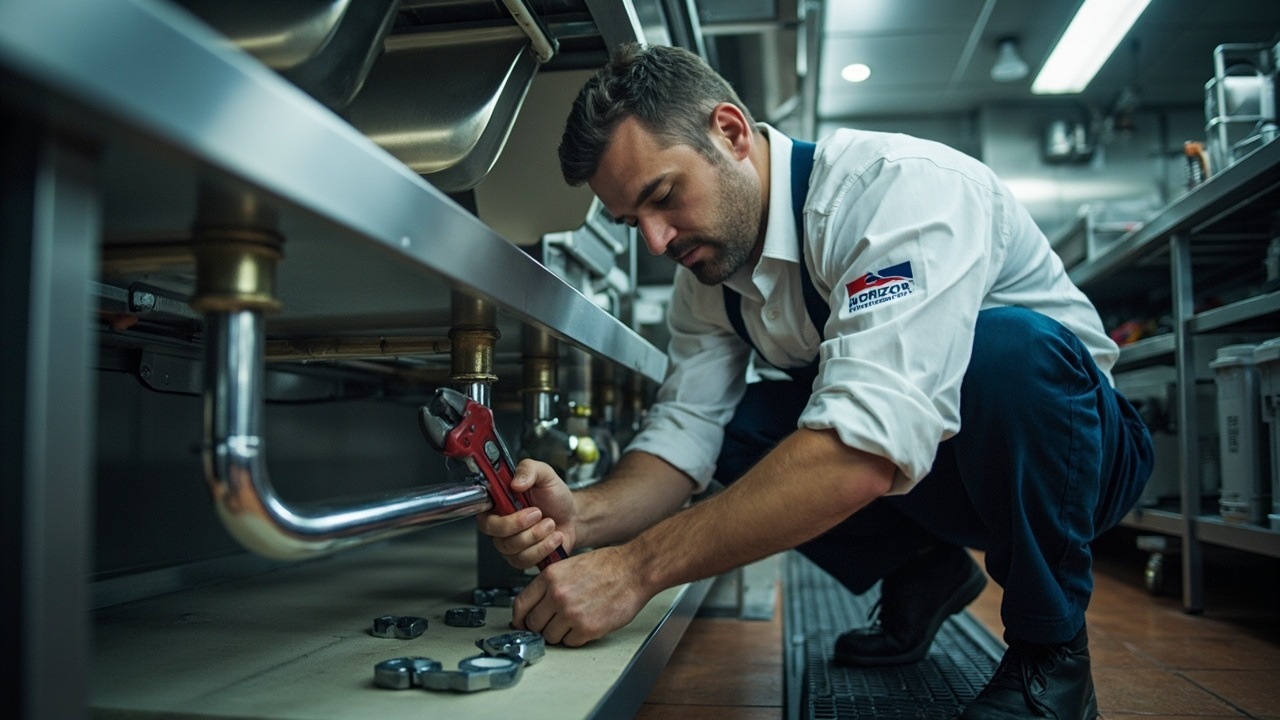
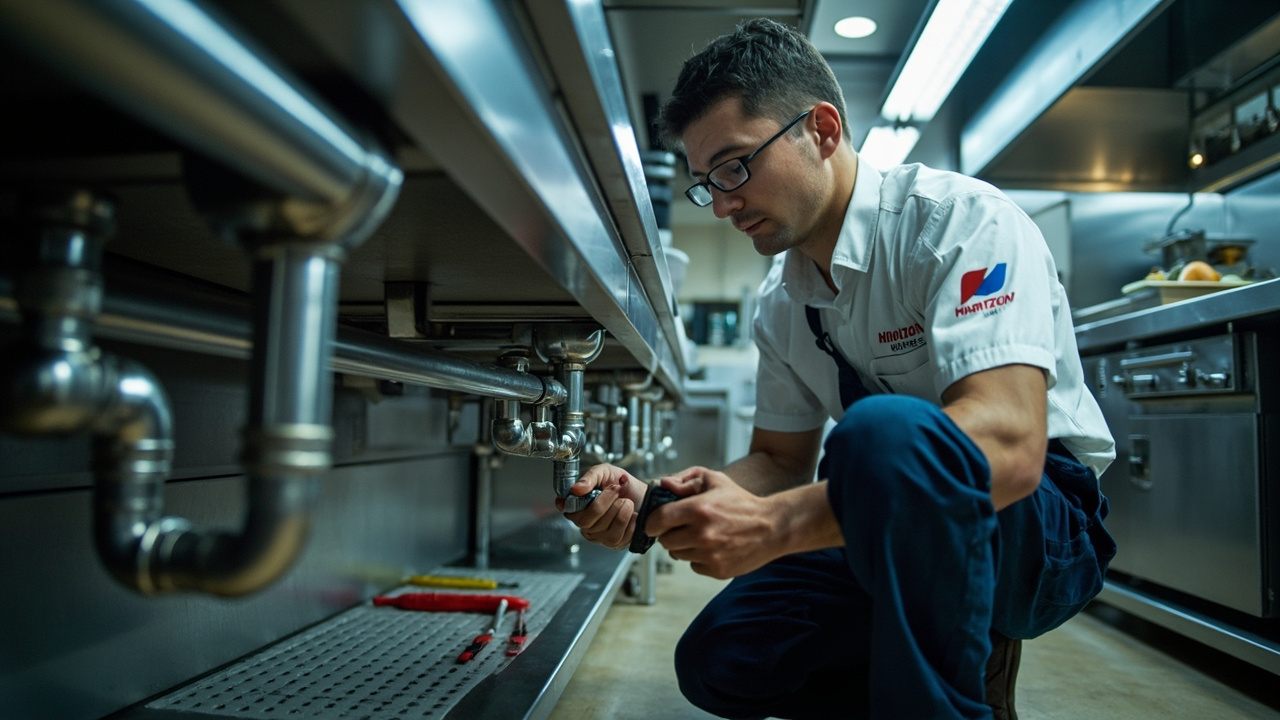
Seattle's food service market does not tolerate downtime. When your kitchen goes dark, you lose revenue every minute until service resumes. Horizon Plumbing Seattle maintains priority response protocols for commercial kitchen emergencies, with trucks stocked for restaurant-specific repairs that residential plumbers cannot execute.

We understand Seattle's unique permit requirements. King County demands engineered drawings for grease interceptor installations over 1,000 gallons. The City of Seattle requires separate permits for water service upgrades versus drainage modifications. Many contractors bundle this into vague "permit fees" without explaining the actual compliance path. We handle the full permit process, coordinate inspections, and ensure your work passes the first time, eliminating the reopening delays that cost you weekend revenue.

Our commercial kitchen plumber team has installed systems in Pike Place Market's tight quarters, retrofitted Capitol Hill's century-old buildings, and upgraded South Lake Union's high-rise restaurant spaces. Each environment demands different solutions. Pike Place requires specialized venting to meet historic district preservation rules. Capitol Hill's old cast iron often needs full replacement, not patching. South Lake Union's high-rise installations require coordination with building engineers to access main stacks without disrupting other tenants.

Food service plumbing extends beyond fixtures and pipes. Your equipment depends on proper water pressure, temperature stability, and drainage capacity. When your combi oven throws error codes, your ice machine produces hollow cubes, or your glass washer leaves spots, the root cause usually traces to plumbing issues that equipment techs cannot resolve. We diagnose the upstream problems that manifest as equipment failures, saving you unnecessary service calls and replacement costs.

What to Expect When You Call Horizon Plumbing Seattle

Emergency Response Time and Availability

Commercial kitchen emergencies receive priority dispatch 24 hours daily. Main line backups, water heater failures, and gas line issues that threaten your opening get immediate response, typically within 90 minutes in the greater Seattle metro area. We maintain commercial-grade parts inventory for Hobart, Jackson, and Champion equipment, eliminating the multi-day waits that standard plumbers impose while sourcing specialized components. During peak hours, we coordinate with your kitchen manager to minimize disruption, working around service flow rather than demanding full kitchen shutdowns that cost you table turns and revenue.

Comprehensive System Evaluation Process

Initial assessments include fixture unit calculations, pressure testing at peak usage times, and drainage capacity verification using flow measurement tools. We video inspect main waste lines to identify grease buildup, root intrusion, or structural defects before they trigger emergency failures. You receive documentation showing current code compliance status, immediate risk factors, and recommended improvements ranked by urgency and ROI impact. This eliminates surprise failures and allows you to budget capital improvements during your slow season rather than facing forced emergency spending that drains operating capital during high-revenue periods.

Installation Quality and Performance Standards

All commercial installations use schedule 40 PVC or approved ABS for waste lines, with proper cleanout placement every 100 feet and at direction changes exceeding 45 degrees. We install commercial-grade shut-off valves with quarter-turn ball mechanisms, not residential compression valves that fail under constant use. Water lines use type L copper or approved PEX rated for commercial temperature and pressure cycling. Every joint undergoes pressure testing before concealment. You receive as-built drawings showing exact pipe routing, valve locations, and shut-off points, eliminating the guesswork that costs you time during future repairs or renovations.

Ongoing Maintenance and Compliance Support

Commercial kitchen plumbing requires proactive maintenance, not reactive repairs. We provide quarterly grease trap pumping coordination, annual backflow preventer testing as mandated by Seattle Public Utilities, and semi-annual water heater flushing to combat mineral buildup. Your maintenance agreement includes priority emergency response, discounted parts pricing, and scheduled service during your closed hours to eliminate operational disruption. We maintain digital service records that document your compliance history, providing the paper trail that health inspectors require and simplifying your annual permit renewals with the City of Seattle.

Frequently Asked Questions

You Have Questions,
We Have Answers

What type of plumbing is used in commercial buildings? +

Commercial buildings in Seattle use copper, PEX, CPVC, cast iron, or PVC depending on the application and code requirements. Hot and cold water supply lines typically use copper or PEX for durability and pressure tolerance. Waste and vent systems rely on cast iron for sound dampening in multi-story structures or PVC for cost efficiency. Commercial kitchens face stricter standards under Seattle's plumbing code, often requiring schedule 40 pipe, high-temperature materials, and grease interceptor compliance. Material choice depends on occupancy type, fire rating, and health department regulations.

Are floor drains required in commercial kitchens? +

Yes. Seattle's plumbing and health codes mandate floor drains in commercial kitchens to manage spills, cleanup water, and equipment discharge. Drains prevent standing water that creates slip hazards and health violations. They must connect to approved grease interceptors before entering the sanitary sewer. Placement matters. Install drains near dishwashers, ice machines, prep sinks, and walk-in coolers. Drain sizing and slope must meet International Plumbing Code standards enforced locally. Failure to include compliant floor drains during plan review delays permits and opens you to costly retrofits before final inspection.

How much does a commercial kitchen setup cost? +

Cost depends on size, equipment density, and code compliance needs. A small cafe kitchen may require minimal plumbing investment, while a full-service restaurant demands extensive rough-in, grease management, and backflow prevention. Expect costs to climb in Seattle due to permit fees, inspection requirements, and union labor rates. Grease interceptors alone can add significant expense. Factor in water service upgrades, gas line routing for ranges and ovens, and drainage for multiple sinks and dishwashers. Budget early and engage a licensed commercial plumber during design to avoid change orders.

What plumbing is needed for a kitchen? +

A commercial kitchen requires potable water supply for prep sinks, handwashing stations, dishwashers, and cooking equipment. You need drainage for sinks, floor drains, and equipment discharge. Gas lines serve ranges, ovens, and fryers. Install backflow prevention devices to protect the water supply from contamination. Grease interceptors are mandatory to trap fats, oils, and grease before they enter the sewer. Seattle enforces strict sizing and installation standards. Vent stacks prevent sewer gas infiltration and maintain proper drainage flow. Plan for accessibility, code compliance, and future equipment changes.

What is the highest paid type of plumber? +

Master plumbers specializing in commercial and industrial projects earn the highest pay. These jobs require complex system design, code expertise, and project management skills. In Seattle, union commercial plumbers working on high-rises, hospitals, or data centers command top hourly rates due to prevailing wage laws and demand for skilled labor. Service plumbers handling emergency repairs for commercial clients also earn well due to after-hours premiums and urgency. Specialization in medical gas, process piping, or seismic retrofit work increases earning potential. Licensing, experience, and business ownership further drive income.

Can I use PEX in a commercial building? +

PEX can be used in commercial buildings, but restrictions apply. Seattle's code permits PEX for potable water distribution in many occupancy types, but check fire ratings and concealment requirements. You cannot use PEX above suspended ceilings in some applications or where continuous exposure to UV light occurs. Commercial kitchens have higher heat and sanitation demands, making copper a safer choice for hot water lines near cooking equipment. PEX also requires specialized fittings and installation techniques. Confirm material approval during plan review with Seattle Department of Construction and Inspections before rough-in begins.

What is the 60 30 10 rule for kitchens? +

The 60 30 10 rule is a design principle, not a plumbing code. It suggests 60 percent of a kitchen's visual space should be a dominant color, 30 percent a secondary color, and 10 percent an accent. This concept does not apply to plumbing systems or commercial kitchen compliance. For commercial kitchens in Seattle, focus on fixture spacing, drainage capacity, backflow prevention, and grease management instead. Your design must prioritize workflow efficiency, health code adherence, and equipment serviceability. Color schemes matter for branding, but code compliance keeps your doors open.

What are the 5 C's of the kitchen? +

The 5 Cs of the kitchen are cleaning, cooking, cold storage, communication, and customer service. This framework helps restaurant operators organize workflow and staff roles. From a plumbing perspective, cleaning and cold storage drive system design. You need adequate drainage for dishwashing stations, mop sinks, and floor drains. Cold storage equipment like ice machines and walk-in coolers requires dedicated water supply and waste connections. Seattle health codes enforce handwashing station placement and backflow prevention for equipment. Plan plumbing infrastructure around operational flow to minimize downtime and maintain compliance.

Can you use PVC in a commercial kitchen? +

PVC can be used for commercial kitchen drainage and vent systems, but material selection depends on temperature and chemical exposure. Seattle code permits schedule 40 PVC for drain, waste, and vent applications if water temperature stays below 140 degrees Fahrenheit. For high-temperature discharge from dishwashers or kettles, you need CPVC or cast iron. PVC resists corrosion and installs quickly, reducing labor costs. However, it lacks the sound dampening and fire resistance of cast iron. Confirm material approval with local inspectors and the health department before installation.

What is the most expensive part of a commercial kitchen? +

The most expensive part is often the hood and fire suppression system, but plumbing costs run close behind. Grease interceptors, backflow preventers, and gas line installation add up fast. In Seattle, permit fees, inspection delays, and union labor rates inflate costs. Underestimating drainage capacity or water service sizing leads to expensive change orders mid-construction. Equipment with complex plumbing needs, like combi ovens or high-temperature dishwashers, require specialized rough-in. Budget for contingency and engage a licensed commercial plumber early to avoid costly surprises during inspection.

How Seattle's Health Code Requirements Impact Restaurant Plumbing Systems

King County Public Health enforces strict handwashing station requirements that many restaurant plumbing services overlook until inspection failures force costly retrofits. Every food prep area needs a hands-free handwashing sink within 25 feet, supplied with 100-degree water that reaches temperature within 10 seconds. Seattle's cold incoming water temperature, often 45 degrees during winter months, demands properly sized mixing valves and recirculation loops that standard residential water heaters cannot support. Commercial kitchen plumbers must calculate heat loss across pipe runs, factor in simultaneous fixture use, and size systems that maintain code-required temperatures during your busiest service periods without creating scalding risks that violate safety regulations.

Seattle Department of Construction and Inspections maintains different permitting pathways for tenant improvements versus ground-up construction, and many contractors waste your time and money by following the wrong process. SDCI requires engineered drawings for any commercial kitchen exceeding 2,000 square feet or installations involving gas lines larger than one inch. Professional kitchen plumbing contractors maintain relationships with mechanical engineers licensed in Washington State, coordinate plan review meetings to resolve issues before formal submission, and understand which inspectors handle commercial food service in each district. This local knowledge eliminates the 90-day permit delays that uninformed contractors blame on "the system" while your lease runs and your opening date slips.

Plumbing Services in The Seattle Area

Horizon Plumbing Seattle proudly serves the entire Seattle metropolitan area and surrounding communities. We invite users to view our service area map to confirm that your home or business falls within our coverage zone, ensuring we can deliver fast, reliable service right to your doorstep. Our professional team is strategically located to offer prompt dispatch, whether you're in the heart of downtown or the outlying neighborhoods. Call us to confirm coverage and schedule your expert plumbing appointment today; we look forward to serving you with confidence and a warm welcome.

Address:
Horizon Plumbing Seattle, 1515 Dexter Ave N, Seattle, WA, 98109

Additional Services We Offer

Our news updates

Latest Articles & News from The Blogs

Is Your Garbage Disposal Safe for the Septic System at Your Rural King County Property? If you live in a…

Is Your Garbage Disposal Safe for the Septic System at Your Rural King County Property?

Is Your Garbage Disposal Safe for the Septic System at Your Rural King County Property? If you live in a…

Why You Should Consider a Pressure Reducing Valve for Your Phinney Ridge Home

Why You Should Consider a Pressure Reducing Valve for Your Phinney Ridge Home Living in Phinney Ridge means dealing with…

The Real Difference Between a Main Line Clog and a Simple Sink Drain Issue

The Real Difference Between a Main Line Clog and a Simple Sink Drain Issue \n\n Water backing up in your…

Contact Us

Your kitchen is revenue lost every hour it stays offline. Call Horizon Plumbing Seattle at (564) 220-5552 now for priority commercial service. We respond to restaurant emergencies 24 hours daily and coordinate non-emergency installations around your operating schedule to protect your bottom line.