



menu

Preventative Commercial Maintenance in Seattle | Minimize Downtime with Scheduled Plumbing Service Agreements

Protect your business operations with routine commercial plumbing inspections and preventive commercial plumbing services designed to catch failures before they shut down your facility, ensuring uninterrupted service and regulatory compliance across Seattle's commercial districts.

Slider Image 1
Slider Image 2
Slider Image 3
Slider Image 4
Slider Image 5
Slider Image 7
Slider Image 8
Slider Image 9
Slider Image 10
Slider Image 11

Seattle's Commercial Plumbing Demands Year-Round Reliability

Your restaurant, office building, or manufacturing facility cannot afford a plumbing failure during business hours. Seattle's persistent rain and aging infrastructure create unique pressures on commercial plumbing systems. Corrosion accelerates in the Pacific Northwest's moisture-saturated environment, and the city's older commercial buildings in Pioneer Square, Capitol Hill, and the University District operate with galvanized pipes that degrade faster under Seattle's soft water conditions.

A single pipe burst or drain backup can halt operations, trigger health code violations, and create liability exposure. Commercial plumbing maintenance plans address these risks before they materialize into costly emergencies. Scheduled commercial plumbing upkeep identifies failing pressure regulators, corroding waste lines, and degrading backflow preventers while your building is occupied but before systems fail completely.

Seattle's commercial sector operates under strict Department of Ecology grease trap regulations and backflow prevention requirements. Non-compliance creates fines and operational shutdowns. Routine commercial plumbing inspections ensure your systems meet Seattle Public Utilities standards and document compliance for audits. Preventive commercial plumbing services also reduce insurance claims, extend equipment life cycles, and eliminate the premium costs associated with after-hours emergency calls.

The risk calculation is straightforward. Reactive maintenance costs three to five times more than scheduled service. Downtime compounds that loss with revenue interruption, reputation damage, and regulatory consequences. Commercial plumbing service agreements shift your facility from crisis management to predictable operational expense, giving you budget certainty and system reliability.

Seattle's Commercial Plumbing Demands Year-Round Reliability
How Strategic Commercial Plumbing Maintenance Protects Operations

How Strategic Commercial Plumbing Maintenance Protects Operations

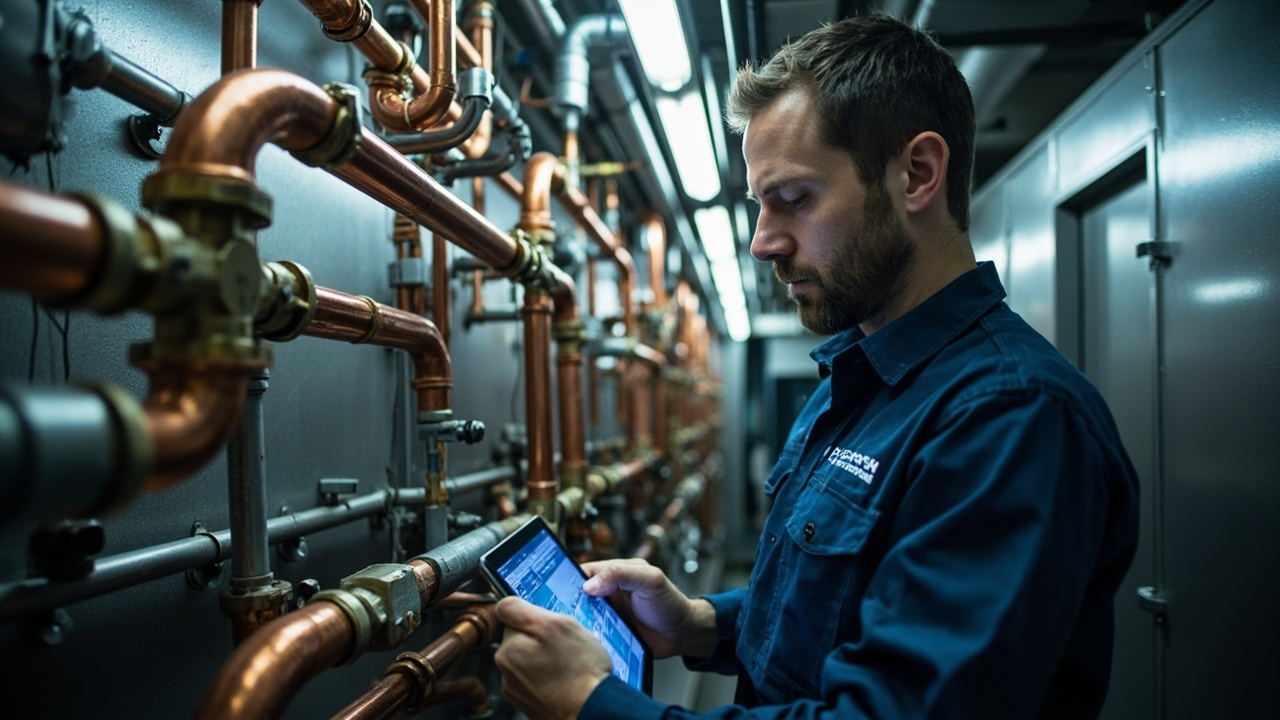
Effective commercial plumbing maintenance plans begin with system mapping and failure probability assessment. We document your entire plumbing infrastructure, including riser diagrams, shut-off valve locations, and equipment age. This baseline allows us to prioritize high-risk components like water heaters approaching end-of-life, pressure-reducing valves showing wear, and drain lines with chronic slow-flow issues.

Routine commercial plumbing inspections follow a defined protocol calibrated to your facility type. Restaurants receive quarterly grease trap service and monthly drain line treatments with enzymatic cleaners to prevent buildup. Office buildings get semi-annual backflow testing, annual water heater flushing, and pressure regulator calibration. Manufacturing facilities require customized schedules based on process water usage and wastewater characteristics.

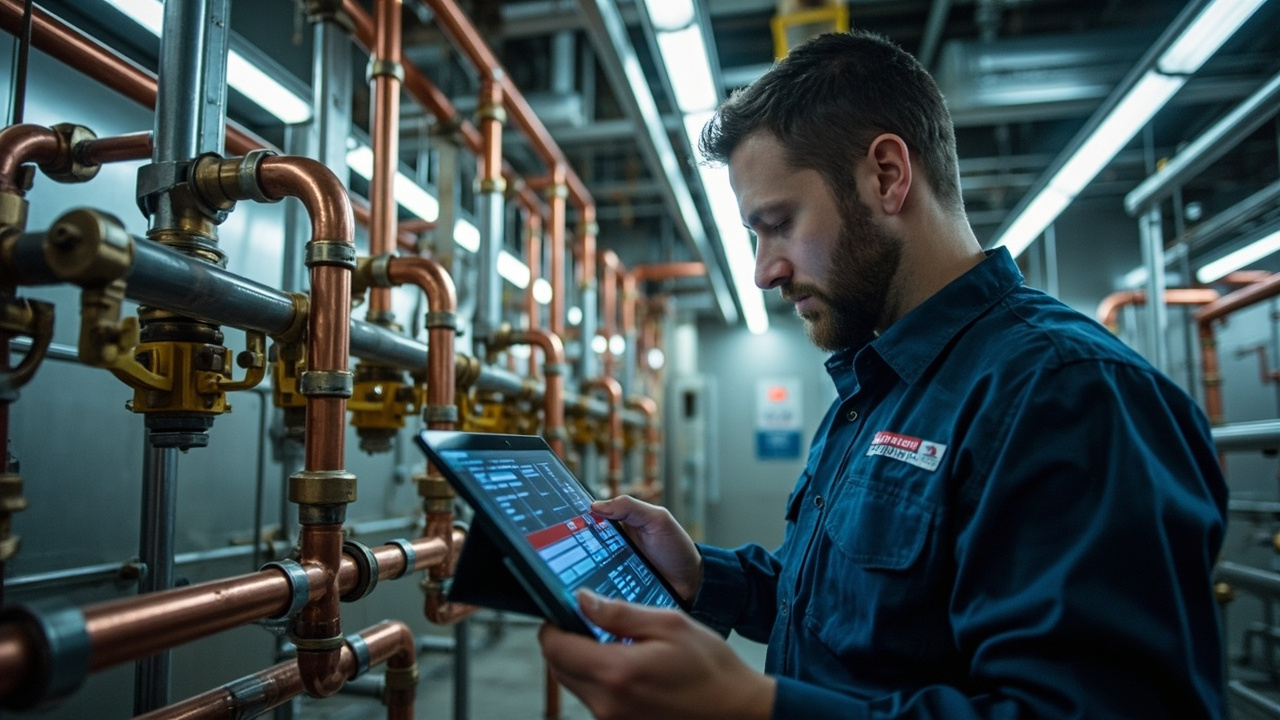
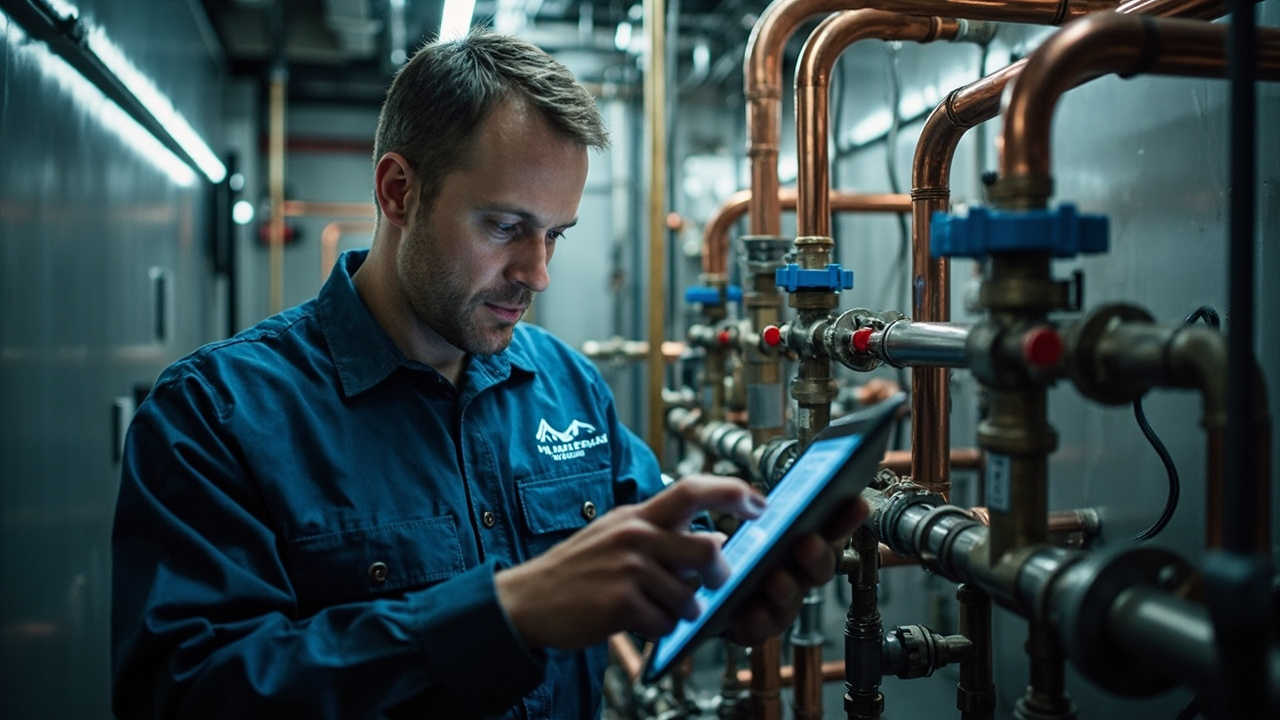
Our technicians use diagnostic equipment you will not find in reactive service calls. Infrared cameras detect hidden leaks behind walls. Hydrostatic testing confirms system integrity under operating pressure. Video inspection of drain lines reveals root intrusion, bellied pipes, and deteriorating gaskets before they cause backups. We measure flow rates at fixtures to identify pressure drops that signal blockages or failing pressure regulators.

Preventive commercial plumbing services also include parts replacement on wear schedules rather than failure schedules. Flush valves, fill valves, and flapper assemblies get replaced before they stick or leak. Expansion tanks receive pressure checks and recharging. Tempering valves get rebuilt to maintain safe water temperatures and prevent scalding liability. This approach eliminates surprise failures and the inflated costs of emergency parts procurement and after-hours labor rates.

Your Commercial Maintenance Service Flow

Preventative Commercial Maintenance in Seattle | Minimize Downtime with Scheduled Plumbing Service Agreements
01

Facility Assessment and Custom Protocol Design

We walk your entire facility to catalog fixtures, identify equipment, and map your plumbing infrastructure. You receive a detailed risk assessment identifying high-priority components and a customized maintenance schedule aligned with your operational requirements. This assessment includes code compliance verification for backflow devices, grease traps, and required air gaps. Your protocol accounts for tenant mix, occupancy patterns, and seasonal usage fluctuations unique to Seattle's commercial calendar.
02

Scheduled Service Execution

Our technicians arrive during your specified maintenance windows to minimize disruption. Each visit follows the protocol checklist, documenting findings with photos and measurements. We perform required tasks like backflow testing, water heater flushing, and drain line cleaning. Any anomalies trigger immediate notification with repair recommendations and urgency ratings. You receive detailed service reports documenting completed work, system condition, and upcoming scheduled tasks. Parts replacement happens proactively based on manufacturer service intervals and observed wear patterns.
03

Performance Tracking and Plan Optimization

Your commercial plumbing service agreement includes quarterly business reviews analyzing service data and system performance trends. We track failure rates, emergency call frequency, and maintenance cost per square foot. This data drives protocol adjustments, budget forecasting, and capital planning for major replacements. You gain visibility into total cost of ownership and can make informed decisions about system upgrades. Our preventive approach reduces emergency calls by an average of seventy percent and extends equipment service life significantly.

Why Seattle Businesses Choose Horizon Plumbing Seattle for Commercial Maintenance

Commercial plumbing in Seattle requires familiarity with both modern construction and the vintage systems common in older neighborhoods. Buildings constructed before 1980 often contain galvanized steel pipes that corrode from the inside out in Seattle's soft water. We understand how to evaluate remaining service life and plan phased replacements that align with your capital budgets and minimize tenant disruption.

Seattle's plumbing code requires annual backflow testing for commercial properties. We maintain certification as backflow assembly testers and file required reports directly with Seattle Public Utilities. Our testing schedule aligns with your occupancy calendar to avoid business interruption. We also navigate Seattle's complex permitting requirements for plumbing modifications, grease interceptor installations, and water service upgrades.

Local geology creates unique challenges for commercial properties. Seattle's fill soil in areas like SODO and Georgetown causes settling that stresses rigid pipe connections. We install flexible couplings and expansion joints that accommodate building movement without creating leaks. Properties near Elliott Bay face elevated corrosion rates from salt air exposure. Our maintenance protocols account for these environmental factors with accelerated inspection intervals and corrosion-resistant component specifications.

You need a plumbing partner who understands your business continuity requirements. We maintain sufficient parts inventory to handle common commercial repairs without procurement delays. Our technicians carry commercial-grade fixtures, backflow parts, and water heater components in stock. For specialized equipment, we leverage relationships with local suppliers to expedite delivery. This preparation eliminates the multi-day delays common with residential-focused contractors attempting commercial work.

Horizon Plumbing Seattle structures commercial plumbing maintenance plans around your operational needs, not generic service templates. We accommodate your scheduling constraints, tenant coordination requirements, and budget cycles.

What Your Commercial Maintenance Agreement Includes

Flexible Scheduling and Priority Response

Your commercial plumbing service agreement includes guaranteed service windows aligned with your operational calendar. We schedule routine maintenance during low-occupancy periods to minimize tenant impact. Agreement holders receive priority emergency response with faster dispatch times than non-contract calls. You get a dedicated account manager who understands your facility and can authorize repairs without requiring multiple approvals. This streamlined communication eliminates delays and ensures rapid decision-making when issues arise. Emergency service receives the same technician familiarity with your systems that routine maintenance provides, reducing diagnostic time and improving first-call resolution rates.

Comprehensive Documentation and Compliance Support

Every maintenance visit generates a detailed service report documenting completed tasks, system observations, and recommended actions. You receive digital records with photos showing component condition and measurement data. We maintain a complete service history for your facility, simplifying audits and insurance claims. Required compliance testing like backflow certification gets scheduled automatically and filed with Seattle Public Utilities on your behalf. Your agreement includes annual code compliance reviews identifying potential violations before they trigger fines. We track equipment warranties and service intervals, ensuring manufacturer requirements are met to preserve coverage. This documentation protects you during tenant disputes, insurance claims, and regulatory inspections.

Predictable Budget and Cost Control

Commercial plumbing maintenance plans convert unpredictable emergency expenses into fixed monthly costs. You pay a consistent service fee that covers scheduled maintenance, inspections, and minor repairs. This predictability simplifies budgeting and eliminates surprise capital requests. Agreement holders receive preferred pricing on repairs and replacements, typically fifteen to twenty percent below standard rates. Volume purchasing power and planned parts procurement reduce your material costs. The real savings come from avoided downtime. A single day of closure costs more than years of preventive maintenance. By catching failures early, you protect revenue, maintain tenant satisfaction, and avoid the premium labor rates associated with after-hours emergency calls.

Long-Term Planning and System Optimization

Your agreement includes annual facility reviews assessing overall system health and identifying capital improvement opportunities. We provide multi-year replacement forecasts for major components like water heaters, sewage ejector pumps, and pressure boosting systems. This forward planning allows you to budget appropriately and schedule replacements during planned downtime rather than emergency situations. We also identify efficiency upgrades that reduce water consumption and utility costs. Low-flow fixture retrofits, pressure optimization, and leak elimination programs often pay for themselves through reduced utility bills. Your quarterly business reviews include cost analysis, failure trend data, and performance metrics that demonstrate program value and guide strategic decisions about your plumbing infrastructure.

Frequently Asked Questions

You Have Questions,
We Have Answers

What are the 5 types of preventive maintenance? +

The five types of preventive maintenance are time-based, usage-based, predictive, prescriptive, and condition-based. Time-based maintenance follows fixed calendar intervals. Usage-based tracks operational hours or cycles. Predictive maintenance uses data analytics to forecast failures before they occur. Prescriptive maintenance combines predictive data with automated decision-making to recommend specific actions. Condition-based maintenance monitors real-time equipment performance to trigger interventions when parameters deviate from normal ranges. In Seattle's commercial facilities, combining these approaches reduces downtime and extends asset life cycles in the region's high-humidity environment.

What are the 7 elements of preventive maintenance? +

The seven elements of preventive maintenance are inspection, cleaning, lubrication, adjustment, calibration, replacement, and documentation. Inspections identify wear patterns and potential failures. Cleaning removes debris that causes inefficiency or damage. Lubrication reduces friction on moving components. Adjustments correct alignment and tension issues. Calibration ensures accurate sensor and control readings. Replacement addresses parts near end-of-life before failure. Documentation tracks all activities for compliance and trend analysis. Seattle businesses operating under stringent environmental regulations benefit from documented maintenance records that demonstrate compliance and support liability protection.

What does preventative maintenance include? +

Preventative maintenance includes scheduled inspections, component cleaning, filter replacements, fluid level checks, belt adjustments, electrical connection testing, safety device verification, and performance measurements. The scope covers HVAC systems, plumbing infrastructure, fire suppression equipment, backup generators, and building envelope components. In Seattle commercial properties, preventative maintenance addresses moisture intrusion risks from persistent rainfall, verifies proper ventilation to prevent mold growth, and ensures drainage systems handle high precipitation volumes. This systematic approach prevents emergency failures, maintains regulatory compliance, and protects property values in the competitive Seattle commercial real estate market.

How much does preventive maintenance cost for commercial HVAC? +

Commercial HVAC preventive maintenance costs vary based on system size, complexity, equipment age, and service frequency. Costs scale with tonnage, number of zones, and accessibility challenges. Quarterly service agreements typically cost less per visit than reactive emergency calls. Budget planning should account for Seattle's marine climate, which accelerates corrosion on outdoor units and requires more frequent coil cleaning due to salt air exposure near Puget Sound. Factor in potential insurance premium reductions and energy efficiency gains when evaluating program costs. Most Seattle businesses find preventive contracts reduce total annual expenses compared to reactive repair approaches.

What are the 4 P's of maintenance? +

The four Ps of maintenance are planning, preparation, people, and performance. Planning establishes maintenance schedules and defines task requirements. Preparation ensures technicians have correct tools, parts, and documentation before starting work. People refers to properly trained personnel executing tasks to specification. Performance measures outcomes against key metrics like equipment uptime and mean time between failures. Seattle commercial facilities operating in highly regulated industries must document all four Ps to demonstrate compliance during audits. This framework reduces labor waste, minimizes equipment downtime, and supports business continuity in competitive markets where operational reliability directly impacts revenue.

What is the 10% rule of preventive maintenance? +

The 10% rule states that annual preventive maintenance costs should equal approximately 10% of an asset's replacement value. This benchmark helps businesses budget appropriately for routine servicing without under-maintaining equipment or overspending on unnecessary interventions. The rule applies across mechanical systems, building components, and production equipment. Seattle commercial property managers use this guideline to justify maintenance budgets to stakeholders while accounting for regional factors like accelerated weathering from constant moisture exposure. Equipment operating in Seattle's climate often requires adjustments to this baseline due to corrosion risks and more frequent filter changes necessitated by mold spore loads.

What is included in a PM checklist? +

A PM checklist includes visual inspections, operational measurements, lubrication schedules, filter replacement intervals, belt tension checks, electrical connection testing, safety device verification, and cleaning procedures. Checklists specify acceptance criteria for each measurement and document completion dates. For Seattle commercial buildings, PM checklists address region-specific concerns like roof drain clearing during fall leaf season, HVAC condensate line flushing to prevent algae growth in humid conditions, and emergency generator testing before winter storm season. Digital checklists streamline documentation for compliance reporting and provide historical data that identifies recurring issues requiring capital investment.

What are the 5 basic maintenance skills? +

The five basic maintenance skills are mechanical aptitude, electrical troubleshooting, preventive inspection techniques, diagnostic reasoning, and documentation accuracy. Mechanical aptitude involves understanding how components interact and recognizing abnormal wear patterns. Electrical troubleshooting requires safe testing procedures and circuit comprehension. Preventive inspection identifies early failure indicators before breakdowns occur. Diagnostic reasoning connects symptoms to root causes. Documentation accuracy creates reliable records for compliance and trend analysis. Seattle commercial maintenance technicians also need familiarity with local building codes and environmental regulations that govern refrigerant handling, backflow prevention, and stormwater management in the region's sensitive watershed areas.

What are the 5 pillars of TPM? +

The five pillars of Total Productive Maintenance are autonomous maintenance, planned maintenance, quality maintenance, focused improvement, and early equipment management. Autonomous maintenance trains operators to perform basic upkeep. Planned maintenance eliminates breakdowns through scheduled interventions. Quality maintenance reduces defects by maintaining equipment precision. Focused improvement targets chronic losses through root cause analysis. Early equipment management applies lessons learned to new installations. Seattle manufacturing and warehouse facilities implement TPM to maximize uptime in tight labor markets where equipment reliability directly impacts delivery commitments to regional customers throughout the Puget Sound metro area.

What is a TPM checklist? +

A TPM checklist covers daily operator inspections, cleaning and lubrication tasks, abnormality reporting procedures, autonomous maintenance standards, and planned maintenance schedules. It includes visual management tools like color-coded tags, standardized work instructions, and performance tracking boards. The checklist documents completion of each activity and captures improvement suggestions from frontline personnel. Seattle commercial and industrial facilities use TPM checklists to maintain productivity despite regional challenges like tight labor availability and high wage pressures. Digital TPM systems provide real-time visibility into equipment status across multiple locations, supporting centralized management of distributed Seattle-area operations.

How Seattle's Rain and Aging Infrastructure Demand Proactive Commercial Plumbing Service

Seattle receives thirty-eight inches of annual rainfall, and this persistent moisture accelerates corrosion in commercial plumbing systems. Buildings in Georgetown, Fremont, and Ballard face additional challenges from high water tables that stress below-grade plumbing and create chronic moisture exposure. The city's infrastructure dates heavily to pre-1970 construction, when galvanized steel pipe was standard. These aging systems now face simultaneous end-of-life failures without preventive intervention. Scheduled commercial plumbing upkeep identifies corrosion patterns, measures remaining wall thickness, and plans replacements before catastrophic failures flood tenant spaces and trigger business interruption claims.

Seattle's commercial property owners face strict liability for plumbing-related tenant disruptions and water damage. Preventive commercial plumbing services demonstrate due diligence that protects you during disputes and insurance claims. Our familiarity with Seattle's plumbing code amendments, backflow requirements, and grease trap regulations ensures your facility maintains continuous compliance. We understand the permitting process through Seattle Department of Construction and Inspections and can expedite approvals for emergency repairs. This local expertise matters when code violations threaten your certificate of occupancy or health department approval. Commercial plumbing maintenance plans provide the documentation trail proving you maintained systems to professional standards.

Plumbing Services in The Seattle Area

Horizon Plumbing Seattle proudly serves the entire Seattle metropolitan area and surrounding communities. We invite users to view our service area map to confirm that your home or business falls within our coverage zone, ensuring we can deliver fast, reliable service right to your doorstep. Our professional team is strategically located to offer prompt dispatch, whether you're in the heart of downtown or the outlying neighborhoods. Call us to confirm coverage and schedule your expert plumbing appointment today; we look forward to serving you with confidence and a warm welcome.

Address:
Horizon Plumbing Seattle, 1515 Dexter Ave N, Seattle, WA, 98109

Additional Services We Offer

Our news updates

Latest Articles & News from The Blogs

Is Your Garbage Disposal Safe for the Septic System at Your Rural King County Property? If you live in a…

Is Your Garbage Disposal Safe for the Septic System at Your Rural King County Property?

Is Your Garbage Disposal Safe for the Septic System at Your Rural King County Property? If you live in a…

Why You Should Consider a Pressure Reducing Valve for Your Phinney Ridge Home

Why You Should Consider a Pressure Reducing Valve for Your Phinney Ridge Home Living in Phinney Ridge means dealing with…

The Real Difference Between a Main Line Clog and a Simple Sink Drain Issue

The Real Difference Between a Main Line Clog and a Simple Sink Drain Issue \n\n Water backing up in your…

Contact Us

Stop reacting to plumbing failures and start preventing them. Contact Horizon Plumbing Seattle at (564) 220-5552 to schedule your facility assessment. We will design a commercial plumbing service agreement that protects your operations and controls your costs.